On the Journey: Moving with the Torrent

Note: Regular readers may notice some changes. Please hang in there while the dust settles; I will be posting an update on said changes (including background on the new address and blog title) this weekend. You can still expect reflections on faith, literature, and current events, but I also want to include more science (and specifically astronomy) based content as well. As always, I reserve the right to post as frequently or infrequently as needed, due to my primary duties and busy schedule as a seminarian and graduate student in Theology. Pax.

Augustine’s Confessions: Book I, Chapter 16

But we are carried away by custom to our own undoing and it is hard to struggle against the stream. Will this torrent ever dry up? How much longer will it sweep the sons of Adam down to that vast and terrible sea which cannot easily be passed, even by those who climb upon the ark of the Cross?Confessions I.16

Do not be led away by diverse and strange teachings; for it is well that the heart be strengthened by grace, not by foods, which have not benefited their adherents. -Hebrews 13.9

Bhs_int_classroom_la

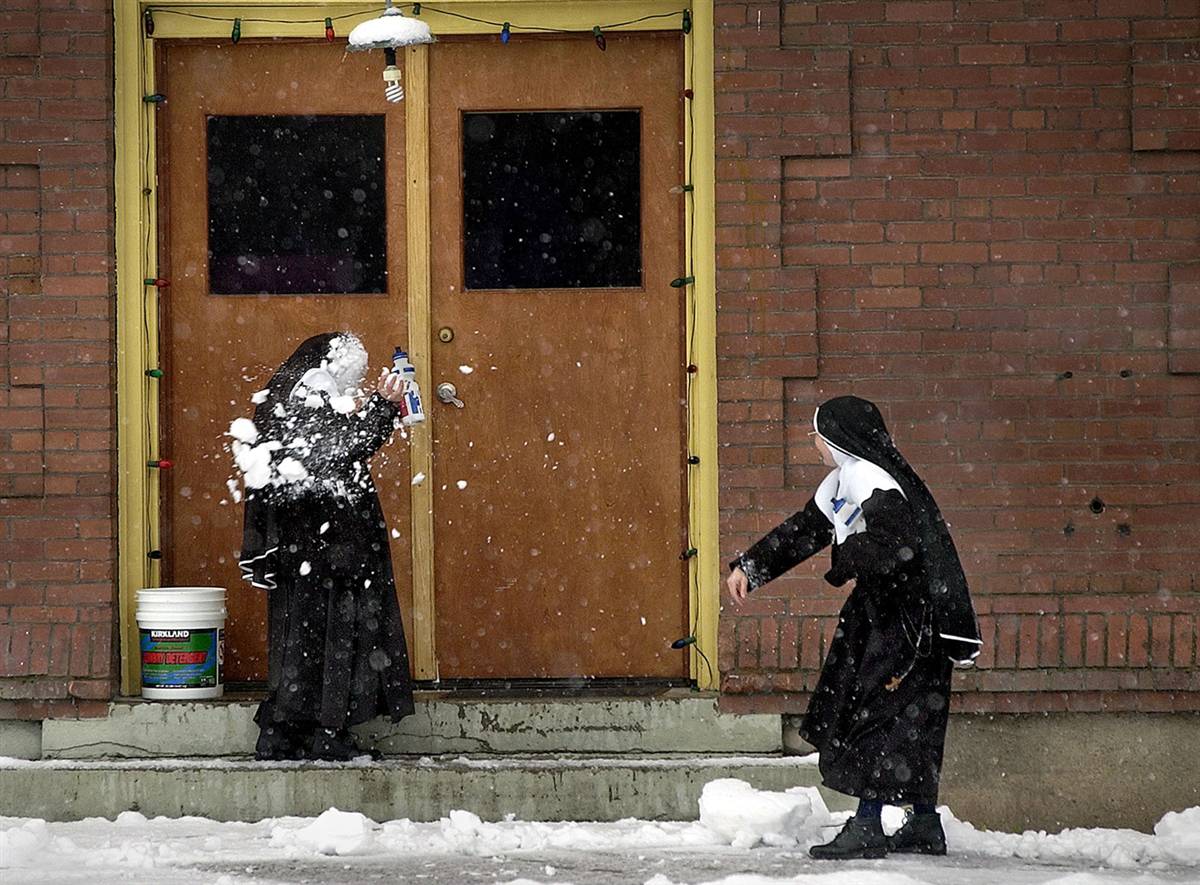
Not for the faint of heart! Photograph of Battlefield High School, taken 2 Feb. 07 by K.D. Reeves. Public domain, free for public use and consumption. Complies with Prince William County School photo use guidelines. Via Wikimedia Commons

Being a teacher is tough. I know. Even though I was not in education any great amount of time, I worked in both the private and public systems. My experience ranged from being an assistant in a program that welcomed students with the most difficult situations and histories to teaching English in a small Catholic school.

Yes, teaching is tough. As a teacher, you are left with the responsibility of forming young minds, of helping them grow and become well-formed individuals. Your job extends far beyond school hours. The Lord knows how many late nights I spent up as a teacher! It is not for the faint of heart, for teaching is one of the greatest tasks a person can undertake.

And yet, there are teachers out there who lead their students astray. Whether through imposing their own personal ideologies or teaching outright error inside the classroom or outside the classroom, it is sad to note that some teachers do not lead their students down the right path, and this is what Augustine speaks about in this week’s passage. He recognizes that many of his instructors not only taught contraditions, but taught outright error as well. I know that many reading this may think that surely it is not so bad today (even I bristle at all of this), but I wouldn’t be so fast to make that assumption. While I have been blessed to work with some of the most gifted educators who deserve far more credit than they have received (specifically those in the Catholic school and those who worked with students who experienced Emotional Disturbance), I have also recognized that many parts of the system are broken, particularly in public schools. False ideologies trump truth and more money is thrown at the problem, rather than trying to spend the existing money more responsibly.

Educators have a lot of hard work ahead of them, and we need to pray for those dedicated teachers who seek to teach and form their students properly! But, that’s not what this post is about. This post is about the student…
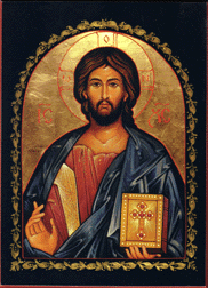
Christ the Teacher icon

Christ the Teacher Icon

Augustine recognizes that even though some of his teachers led him down wrong paths, he was more than willing to follow them: “It is true that I learned all these things gladly and took a sinful pleasure in them. And for this very reason I was called a promising boy” (I.16). Augustine acknowledges that even though teachers have a certain responsibility, so to do the students. As we journey on the spiritual path, we should and must look to others for guidance. But those whom we seek need to be well-founded in the truth.

Let’s look at science: would you trust an established scientist who presents peer-reviewed research, or the guy selling snake oil or other “get well quickly” schemes in order to treat an illness? Would you look to an experienced cosmologist to teach you about the universe or the conspiracy theorist who sees shadows around every corner?

But what about our faith? How does all of this apply to Christianity? As Catholics, we have the authority of the Scripture, Tradition, and the Magisterium. Clinging to the Word of God, looking to the history of the Church, and allowing ourselves to be rightly guided by our shepherds, we can grow closer to the Lord. Some practical ways to do all of this are to read Scripture daily, study the lives of the saints, and get to know the Catechism. In the next few days, I will pass along some helpful hints on reading Scripture and staying with it.

There is one true teacher, but we as students must choose to follow Him.

Questions for reflection:

  • What can I do to better inform myself about my faith?
  • Have I allowed myself to be carried away by strange teachings?

This is part of a continuing series, Companions on the Journey, which travels along with a particular companion in the spiritual life, one of the great saints, in order discover how some of their writings might be applicable to our everyday lives. Currently, we are traveling with Augustine of Hippo through his work, Confessions. You can take a look at previous posts in the series or read the introduction.

Pic of the Week: A Universal Scale

(If you were a subscriber to The Road Goes Ever On, from walkingamdg.wordpress.com, things may look a bit different. Don’t worry, I’m simply redesigning the site a bit, including adding a new custom address: BelievingAstronomer.com, with a focus on faith, science, literature, reflections, with news and reviews thrown in from time to time. A longer post will be added this weekend, as I am currently on retreat and this post is simply a pre-scheduled item that I set up at the end of December. Feel free to tell me what you think!)

From time to time, I will post interesting pictures from astronomy and cosmology, although expect a few surprises too… I’m talking science fiction, faith, or other branches of human knowledge that relate to this enterprise. This week, however, we look at the solar system. In fact, we look at how mind-bogglingly huge our solar system is through NASA’s own APOD, which, incidentally, has brought us a video rather than a picture. Enjoy!

From NASA:  Want to build a scale model Solar System? A blue marble 1.4 centimeters (about half an inch) across would be a good choice for a scale model Earth. Since the Sun is 109 times the diameter of Earth, a 1.5 meter diameter balloon could represent the Sun. But the distance between the Earth and Sun, 150 million kilometers, would translate to just under 180 meters (590 feet) at the same scale. That would mean the completed project, including the orbits of the outer planets, is probably not going to fit in your backyard. Still, you might find enough room on a dry lakebed. Check out this video for an inspirational road trip through the Solar System to scale.

On The Journey: Christmas with Augustine

Rather than continue with Augustine’s Confessions this week, I thought I would reflect rather on one of his Christmas sermons.Then I read the selection in this morning Office of Readings in the Liturgy of the Hours and remembered that today’s reading comes from Augustine himself, incidentally from one of his Christmas sermons. I read it, reflected upon it, and once again found it eye-opening and inspiring. Then I thought to myself, rather than post my own ramblings, why not let Augustine speak for himself this week?

And so I leave you with Saint Augustine and his words on the mystery and reality of Christmas. God bless you all, and I hope you have a joyous Christmas!

Awake, mankind! For your sake God has become man. Awake, you who sleep, rise up from the dead, and Christ will enlighten you. I tell you again: for your sake, God became man.

Nativity,_Follower_of_Vasco_Fernandes

Nativity, Vasco Fernandes [Public domain], via Wikimedia Commons

You would have suffered eternal death, had he not been born in time. Never would you have been freed from sinful flesh, had he not taken on himself the likeness of sinful flesh. You would have suffered everlasting unhappiness, had it not been for this mercy. You would never have returned to life, had he not shared your death. You would have been lost if he had not hastened to your aid. You would have perished, had he not come.

Let us then joyfully celebrate the coming of our salvation and redemption. Let us celebrate the festive day on which he who is the great and eternal day came from the great and endless day of eternity into our own short day of time.

He has become our justice, our sanctification, our redemption, so that, as it is written: Let him who glories glory in the Lord.

Truth, then, has arisen from the earth: Christ who said, I am the Truth, was born of a virgin. And justice looked down from heaven: because believing in this new-born child, man is justified not by himself but by God.

Truth has arisen from the earth: because the Word was made flesh. And justice looked down from heaven: because every good gift and every perfect gift is from above.

Truth has arisen from the earth: flesh from Mary. And justice looked down from heaven: for man can receive nothing unless it has been given him from heaven.

Justified by faith, let us be at peace with God: for justice and peace have embraced one another. Through our Lord Jesus Christ: for Truth has arisen from the earth. Through whom we have access to that grace in which we stand, and our boast is in our hope of God’s glory. He does not say: “of our glory,” but of God’s glory: for justice has not proceeded from us but has looked down from heaven. Therefore he who glories, let him glory, not in himself, but in the Lord.

For this reason, when our Lord was born of the Virgin, the message of the angelic voices was: Glory to God in the highest, and peace to his people on earth.

For how could there be peace on earth unless Truth has arisen from the earth, that is, unless Christ, were born of our flesh? And he is our peace who made the two into one: that we might be men of good will, sweetly linked by the bond of unity.

Let us then rejoice in this grace, so that our glorying may bear witness to our good conscience by which we glory, not in ourselves, but in the Lord. That is why Scripture says: He is my glory, the one who lifts up my head. For what greater grace could God have made to dawn on us than to make his only Son become the son of man, so that a son of man might in his turn become the son of God?

Ask if this were merited; ask for its reason, for its justification, and see whether you will find any other answer but sheer grace

Questions for reflection:

  • Have you been asleep, and if so, how?
  • What do you need to do in order to wake up, to bear witness to the Lord?

This is part of a continuing series, Companions on the Journey, which travels along with a particular companion in the spiritual life, one of the great saints, in order discover how some of their writings might be applicable to our everyday lives. Currently, we are traveling with Augustine of Hippo through his work, Confessions. You can take a look at previous posts in the series or read the introduction.

On the Journey: Eudaimonia, Pears, and True Happiness

Augustine’s Confessions I.5-6

No one can part You from the things that You love, and safety is assured nowhere but in You.

What motivates our actions? I think it is safe to say that in almost all cases, human beings are driven to act by that which they see as good, that which will lead to happiness. Aristotle says “happiness depends on ourselves” and in a sense, I suppose that is true. In order to be happy, we must act, we must seek that which makes us happy. And what makes us happy? The good, true, and beautiful.

I remember when I first listened to Beethoven’s Missa Solemnis. It was at the recommendation of a dear friend and mentor, Fr. Paschal, God rest his soul. He gave me this advice before listening to it: “Don’t worry about anything else for an hour! Get a nice glass of wine, turn the music on, and just experience it!” Despite my busy academic schedule at the time, I did what he suggested, and it became a pivotal moment: the music moved me in a way that had never happened before. In that moment, I felt truly happy, allowing myself to be caught up in the movement of the work, to escape the worries of life, even if only for an hour. To borrow a literature term, it was truly a pastoral moment.

I was experiencing something that many of us encounter in our lives, in some fashion: there are things on this earth that make us truly happy and bring joy to our hearts. But while they make us happy, we must remember that the good, true, and beautiful leads to something else, something higher.  Augustine reminds us of this deep truth of human existence: we can find goodness in so many things of this world, such as beautiful objects, material things, friendship. For Aristotle, this quest for happiness was a quest for “eudaimonia“, pursuing health, wealth, and excellence to achieve the ultimate in human flourishing. Augustine, on the other hand, goes further: our quest for happiness must move to a much deeper, a much higher. level or we risk twisting even the good things in our lives into something that will bring us to ruin, rather than fulfillment.

What happens when this quest for happiness, or perhaps we can say now fulfillment, becomes twisted? This is where confusion and sin enter the picture. Sin, a turning in on oneself and away from God, is the disordered seeking of that which we think is good but in reality is not, or even seeking a good but through means that fracture our relationship with God and those around us. After all, even the worst atrocities in human history have been committed by people who thought they were doing good. We are wronged, so we commit revenge. We are envious, so we commit murder. We are lustful, so we commit adultery. At the center of these actions is a disordered desire to seek fulfillment: whether it is achieving some sort of excellence, wanting to battle what we perceive as an injustice, or seeking a relationship to fill an inner need to connect on an intimate level with another. In each of these situations, the individual is searching for what he or she thinks is good, but in the end, comes up empty.

In Augustine’s case, it was even worse! He steals a measly pear not because he needed it, or he thought it was better than the fruit he had. He stole it simply for the sheer desire of the sin:

For no sooner had I picked them than I threw them away, and tasted nothing in them but my own sin, which I relished and enjoyed. If any part of one of those pears passed my lips, it was the sin that gave its flavor.

PearBlossomsCalifornia

Pear blossoms from my native California. Who knew fruit could be so much trouble? Well, there was Eden…

Makes you feel a bit better, doesn’t it, knowing that even a Church Father, one of the greatest theologians and leaders in human history, was a lowly sinful person like the rest of us, huh?

St. Augustine was, in reality, seeking happiness, even if it was in a disordered way. This does not excuse the action, of course, don’t get me wrong, but he comes to the realization, praise God to the benefit of Western Civilization, that while the “soul defiles itself with unchaste love when it turns away” from God, it finds a true love “that is pure and unsullied” available only by returning back to the Lord.

We fall, we sin, we seek happiness in all the wrong places. As Augustine shows us, however, true happiness resides in keeping Him at the center of our lives, living the full meaning of the Good, the True, and the Beautiful; we just need to respond to His prompting and take that first step towards true happiness and lasting joy. Praise God, when we fall, His love still waits for us, ready to meet us, and draw us into something greater than we can possibly imagine, for even in the darkest moments, “there is no place whatever where man may hide away” from God and His love.

For reflection:

  1. How do you seek happiness?
  2. Does the way in which you seek happiness lead you towards, or away, from God?

Up Next Wednesday: Confessions I.7-12

This is part of a continuing series, Companions on the Journey. You can take a look at previous posts in the series or read the introduction.

On the Passing of a Friend and Mentor – Fr. Paschal Cheline

With sadness and yet joy, I recently learned of the passing of Father Paschal Cheline, beloved monk and mentor to so many people over his decades of monastic life. Sadness, knowing that his loss is a great one; joy, knowing that he can finally rest from his labors, and through the mercy of God, enter the Father’s house.

When I first entered Mount Angel Seminary, I was filled with a combination of joy, trepidation, and just a general feeling of “oh my gosh, I’m actually here!” As a fresh bright-eyed seminarian of 24 years old, I had some life experience under my belt, but not a lot. Even now, as I approach my 30th birthday, I feel that there is so much more I need to learn, and so many areas in which I need to grow. Back then, and even now, I wondered where and how this growth would occur. How would God work in my life? Then I met a certain monk who loved literature and classical music, who loved liturgy, art, the Church, seminarians and students, and loved living life. Above all, he loved God; he loved Jesus Christ.

Fr. Paschal Cheline - Courtesy of Mount Angel Abbey (I hope the don't mind)

Fr. Paschal Cheline – Courtesy of Mount Angel Abbey (I hope they don’t mind)

Little did I realize the impact that Fr. Paschal Cheline would have on my life. My first encounter with him occurred at the Mount Angel Seminary orientation: my grandfather had just dropped me off and turned back toward Sacramento, my room was a complete disaster from unpacking, although to be fair it’s always a complete disaster, and I found myself praying for guidance from the Holy Spirit during this new phase of my life; much of that guidance would come from Fr. Paschal. Many of my friends who attend or have attended Mount Angel will recall from their own orientations “the talk”, where Fr. Paschal laid forth some of the, shall we say…finer…details of human formation and community life in a humorous yet straightforward manner. From there, Fr. Paschal’s words of wisdom and support would continue to guide me throughout my time at Mount Angel and beyond.

Fr. Paschal helped to reawaken within me many things which I had lost over the years, due to my own life choices or other distractions that I allowed to get in the way. His constant encouragement to read fiction novels, along with Mount Angel’s wonderful literature program, pushed me to re-discover my love for the written word, both in reading and writing. Since that first year, I have not had any time in which I was not reading a novel, even if it took a while to get through said novel due to school work, ministry, and even now lesson planning. Fr. Paschal also immersed me back into classical music, some new artists and some old favorites. I remember clearly one Saturday afternoon when I was worrying about writing a paper and Fr. Paschal told me to “put on some headphones, pour a nice glass of wine and enjoy Beethoven’s Missa Solemnis.” The man had a way of knowing exactly what was needed to encourage or enliven one of his charges.

All of this, however, is secondary to how Fr. Paschal helped to nurture my love of liturgy and the Faith. From private conversations to even his “Liturgical Tidbits” before Evening Prayer on Tuesdays, the Holy Spirit working through Fr. Paschal brought me to a love of the Church and Jesus Christ that I had never imagined. When I first met him, I was still a relatively new Catholic with so much to learn. He recognized my love of learning, and pushed me to a depth of study and prayer I thought not possible. Even now, as I approach the 10th anniversary of my baptism, and with still so much to learn with new discoveries occurring all the time, I often return to Fr. Paschal’s words and encouragement.

I recall with fondness one of our last meetings together, during which he had spoke to me words that I know he has spoken to many other guys, but they were no less relevant: it was towards the end the spring semester in 2014 and I was walking through Anselm Hall, the college dormitory, to go check my mail. By this point in time, I had been struggling with my discernment, and did not know what would come next. As I proceeded past his office, I found Fr. Paschal walking, which was rare at this point in time, down to the staff lounge to have lunch. I asked if I could help him with anything, and he invited me to share lunch with him, some delicious pasta that a friend had made for him that he wanted to finish before it went bad. I suppose recognizing the Hobbit that I am, perhaps he knew that if he offered, I could help him in the task! So we enjoyed each other’s company for about an hour over that pasta, and talked about many subjects, a true blessing because even at this time he was a busy man and often had his attention pulled in many different directions by numerous tasks and people.

Where was I? Ah yes, his words of wisdom, just a few of many of the years! He did not know about my struggles, but I think he sensed what was going on, and he told me this, which he has related to many men over the years: “Young man, it’s O.K. You can pull to the side of the road for a while and rest if you need to, but don’t forget to get back on the road! Keep the faith! Move forward, and don’t stop living!” These words continue to resonate with me today, and I hope they resonate with everyone reading these words now: no matter what the difficulties, know that the Lord is in control of it all, and keep moving forward. You won’t go wrong relying on Him!

I am, of course, no longer at Mount Angel, but the passing of Fr. Paschal I know is a huge loss for that small community up there in the beautiful Willamette Valley, as well as for the thousands of people he has directly touched, and even the hundreds of thousands whom he has indirectly impacted. I still wonder about what the Lord has in store for my life, but through the encouragement of Fr. Paschal Cheline, a holy priest, a passionate teacher, a dedicated mentor, and an understanding friend, I know that through it all, the Lord’s hand is there. While I am sure he would remind us that he was only one man who desired to follow the Lord in obedience, I think we can all learn from his example: look at the impact our lives can have if we but follow the Lord, no matter where He leads, just as Fr. Paschal endeavored to do throughout his many fruitful years!

As I sit here listening to the last movement in the “Agnus Dei” of Beethoven’s Missa Solemnis, even with the accompanying glass of wine almost finished, although I admittedly do not know if it is good wine since I am not a big wine connoisseur, I am reflecting on the time you gave to all of us, and your service to so many men discerning God’s will in their lives. I will be forever in your debt, Fr. Paschal; thank you for your years of dedicated service to the Church, to Mount Angel, and to the many students who crossed your path. May we continue to remember you in our prayers, and through God’s mercy, may you enter the heavenly paradise, with a special corner set aside to finally finish all those novels you never got around to reading.

Réquiem ætérnam dona ei Dómine; et lux perpétua lúceat ei. Requiéscat in pace. Amen.

Pax,

Dean

New Year, Unexpected Wonders, and Tremendous Trifles

“The world will never starve for want of wonders; but only for want of wonder.” -G. K. Chesterton

The New Year is always a time of introspection for me, both intentionally and unintentionally. I try to look back on the previous year, see where things went right, and perhaps where they could have gone a bit differently, or even could have used a tremendous overhaul. Throughout the process, I also discover where I did O.K. for myself (that’s God’s grace rather, not me), and also where I fell completely short of who I am supposed to be, who God wants me to be, and fell flat on my face (ah yes, there’s me).Then I try to evaluate my goals for the coming year, what I am looking for in life, and finally, but most importantly, where I need to let God penetrate in my heart in order to more fully conform myself to His will (and hopefully avoid falling flat on my face again, but we all know that won’t happen; praise God for confession). In other words, I try to find Chesterton’s “wonder” in my life, a wonder that I could not quite put into words until I read the essay from which the above quote originates (praise God for a friend who is better read than I am).

But where does the “wonder” that Chesterton speaks of come in? In other words, what’s the Hobbit getting at???

Careful and the greatest wonders will pass in the blink of an eye… An image of Earth taken from Apollo 8. Source: NASA / Bill Anders [Public domain], via Wikimedia Commons

I think sometimes we can get so wrapped up in the introspection and minutiae, so intent on trying to put everything together, we miss the fact that He, the creator of the cosmos and master of the universe, is right in front of us. There’s Chesterton’s wonder. We miss the wonder in so many ways… In the Eucharist when we receive Him out of habit, or when we visit Him in adoration and let our minds get bogged down by the minutiae of our lives. In the homeless person we try to avoid eye contact with in order to get to our destination faster. In the friend who is suffering a loss, when we keep talking about our own problems, our own tribulations.

I was talking with a good friend today, someone whom I have not had a chance to really chat with in a very long time. As we sat outside in Capitol Park, our conversation ranged the gamut of a variety of subjects, but at one point we got to talking about our vocations. Both of us have had, shall we say, a bit of a journey when it comes to vocational discernment. This person mentioned that in the end, it was selfishness that prevented us from seeing God’s plan, and I think that is true. We want this or that, but what does God want? Is our will aligned to His? Selfishness and pride keeps one from discovering the beauty and wonder of His grace, and how it will unfold for that individual person. For my friend and I, I think it wasn’t until we allowed, and I mean really allowed, just a bit of that wonder to enter into our lives that we began to see where God truly wanted us.

So yes, I think we miss the wonders because we are selfish. We miss the wonders because of our pride. Sure, we want to become great, and think we have it all together, but as Chesterton alludes to in the above referenced essay, in seeking out the greatness in our lives we forget that we need to be small, and in that smallness, the “Little Way” of St. Therese, we in fact discover true wonder, the presence of God in all that we encounter.

On a side note, I think Chesterton and St. Therese would be (and perhaps are!) very good friends. Anyway, back to my droning…

In the end, it leads back to Chesterton’s quite tremendous trifle: if we become too introspective, too big, and too wrapped up in trying to figure out where everything is going, we are being selfish and not allowing God to take control, and thereby allowing the wonders to pass by, whether these wonders be people, places, events, or just quiet moments with Him. We become so big to see the mountains, we miss the tiny flower that points us in the right direction. We need to be small (hey, I already have a head start!). We become stagnant and fail to take action. In our “bigness” (yes, that’s a word; I double-checked) we may become invulnerable and believe that everything is as it should be, sure, but it is not an invulnerability to be sought after or cherished, because this kind on invulnerability stifles wonder, and even love:

“To love at all is to be vulnerable. Love anything and your heart will be wrung and possibly broken. If you want to make sure of keeping it intact you must give it to no one, not even an animal. Wrap it carefully round with hobbies and little luxuries; avoid all entanglements. Lock it up safe in the casket or coffin of your selfishness. But in that casket, safe, dark, motionless, airless, it will change. It will not be broken; it will become unbreakable, impenetrable, irredeemable. To love is to be vulnerable.” -C.S. Lewis

So for this new year, let’s examine, let’s make our resolutions, which can be fine and good, but then let’s move. Let’s not become too big for ourselves that we lose sight of God’s wonder, which is probably sitting right next to us. Take action, and see the world. See the wonder, rather than getting wrapped up in a coffin of selfishness and pride. After all, a world without wonder is a boring world indeed.

Pax.

Gaudete Sunday: Finding Joy in Unexpected Places

Well, I suppose it has been a while since I have posted to these pages, and for good reason too: I simply have not had the time to post! Back in late July/early August, I accepted a full-time position teaching Middle School English at a private Catholic school in Northern California. The transition from seminary life back into working in education has not always been easy! Finding a place to live was probably the most difficult, and commuting for two+ hours a day before I found that place to live was almost as hard. I have found, however, particularly as I reflect upon the lessons of Advent, that in the times when there are many unknowns, there are also the most profound graces.

Often, we are called to simply wait, and that my friends is precisely what Advent is about. We wait for the coming of the Christ child, and sometimes that waiting bears with it unknowns which unsettle the soul. Where is God calling us? Why does this or that happen? What are we supposed to do in the present moment? Remember, Advent, at its core, is a penitential season, infused with joy as it is, and so we are called to reflect on these questions, and how we can invite Jesus into our lives.

It is no accident that I am writing this on Gaudete Sunday, as the answer to all of these questions resides within what we remember today: joy. Where does God call us? Joy. How do we encounter the various ups and downs of life? With joy, for even in the difficult moments, He is there. What are we supposed to do in the present moment? Live out a joyful life in the Lord. I am not trying to express some rose-colored view (pardon the pun for you liturgical nerds) that everything is always perfect and we are bright-eyed and happy in every moment. What I am saying, however, is that it is in joy we must live, and the joy of a life in Christ Jesus radiates outward, touching our hearts and the hearts of those around us. Joy moves beyond mere happiness, beyond temporal satisfactions, and into the heart of Christ Himself.

Live a life of joy; be sure to have some fun along the way.

Live a life of joy; be sure to have some fun along the way.

Joy is precisely what I have found in this small school and community. Yes, it is difficult. The hours can be long, I have sooooo much to learn, and as any teacher at a Catholic school will tell you, the pay isn’t the best. But money isn’t everything; if it was, I would be an IT person, and not a teacher or writer. I did not expect to find the joy that I have discovered, but the Lord has a habit of blowing our expectations out of the water. Sure, I have dreamt of being an English teacher since I was in high school, but I was skeptical about moving to this little town. I have found, however, the joy of the people here is a joy truly reflected of those who follow in His footsteps.

I’m not sure what the future holds; none of us can be, even if we have strong inclinations to where He leads. I have hopes and dreams, especially of teaching, having a family, and, as another short person I know would be fond of, living a simple life with good tilled earth. All of this, however, is up to Him, and I only hope and pray that I will follow Him wherever He may lead. I am sure, however, that joy resides in just that, following Him, and that we can find this joy if we just trust and wait, inviting Him into our lives.

Please pray for me, that I follow His will alone, and know that you remain in my prayers as well! A blessed Advent to you all!

Pax et bonum.

PS: Now that things are finally calming down, I hope to post here more regularly (haha – we will see about that), including my promised Bad Poetry series, and another idea I am working on about the lessons of a new teacher…

Trinity, Love, and Vocation

This summer I am traveling around my diocese giving talks regarding vocational discernment. Specifically, we are inviting men to consider a vocation to the priesthood as part of an initiative called the “Fiat Missions” through our Office of Vocations. At the parish we are speaking at this week, we were asked by the priest to reflect specifically on the Holy Trinity and the meaning of “vocation” since tomorrow is the Solemnity of the Most Holy Trinity. I thought that I would share my reflection here, although I have made a couple of small edits to fit the format of the blog. You can also visit our diocesan vocations blog here, where I am my fellow seminarians write about various experiences throughout our journey and how the Lord works in our lives.

Fiat Mission Reflection – 15 June 2014 – Trinity Sunday

france-85871_640

Before I was Catholic, I lived a very worldly lifestyle. I was in college at the time of my conversion and I had a great job working in a local school district. I had a girlfriend, and my spiritual path aligned with the New Age Movement. For all intents and purposes, by worldly standards, I was a young person who was successful, on his way up in the world. I loved everything about my life. I loved me. But something was missing. Eventually, I discovered an emptiness, a sort of lacking in my life.

In today’s Gospel, and as we celebrate the Solemnity of the Most Holy Trinity, I am drawn to consider, with everyone here, exactly what was missing in my life, in our lives, and perhaps what continues to be missing in some degree in so many other lives: true love. In the words of St. John today, we hear that “God so loved the world, he gave his only Son, so that everyone who believes in him might not perish but might have eternal life.” So many of us continue to miss this love of God, the love that the Father sends in the person of His Son. Before my conversion, I only loved myself; it was in no way a sacrificial love. What we see in today’s readings, however, is that the creator of the universe gave Himself, gave His son, for us. We continue to see that love, that self-gift, in the Holy Spirit. The saving mercy that we find in Christ continues to guide us all in the person of the Spirit here and now. In turn, we are called to live out the love of the Holy Trinity in our own lives.

Today, on Trinity Sunday, as complicated as the reality of the Trinity may seem, we need to focus on only one thing to begin grasping this beautiful doctrine that the Church presents us: love. In the Trinity, we see the love of the Father in creation, the sacrificial love and mercy of the Son, and the continued guidance of the Church through the love of the Holy Spirit. This love is constantly shared among all three persons of the Trinity, who continually give themselves to each other.

But! As we can see, this love is not some self-contained thing that remains in God alone! He gives us that love. But how do we respond? Do we respond by loving ourselves and the world alone, just as I was so intent on doing during my early college years? No, we must give that love back to Him, by loving Him with everything we can. So here, brothers and sisters, is where I get ready to challenge you: do you love Him? Do you love Him by not only coming to Church on Sunday and other days, but by everything you say and do throughout your lives? When those times come when that love does fall short, and this happens to all of us, do you return to His love in the sacrament of confession? Most of all, do you seek how to fully live a life of love, how to fully glorify Him in everything? St. Therese of Lisieux, the Little Flower, writes,

I know of no other means to reach perfection than by love. To love: how perfectly our hearts are made for this! Sometimes I look for another word to use, but, in this land of exile, no other word expresses so well the vibrations of our soul. Hence we must keep to that one word: love.

So the challenge is this, particularly for young people: just as God gave everything in His son, so too must we give everything we can back to Him, no matter how many times we may stumble. Ask God who He created you to be. Your vocation, whether you are called to married life, single life, religious life, or the priesthood, should be a vocation of love. Particularly for those young men considering priesthood, spend some time with the Lord, especially in the sacraments and through prayer in His presence before the tabernacle. I invite you to speak to a priest or seminarian about their vocation stories and what formation for the priesthood is like. Just like every other vocation, the priesthood is a vocation that should remain centered on love, on Jesus Christ. The love that we find in the Trinity, that sacrificial and self-giving love, is present in the life of the priest. How is God calling you to live a life of love? I don’t know, but I invite you to take the first step in finding out, in discovering how God beckons you to love Him and all His people.

Please pray for me, and know that we all continue praying for you.

A Link in the Chain

“God has created me to do Him some definite service. He has committed some work to me which He has not committed to another. I have my mission. I may never know it in this life, but I shall be told it in the next. I am a link in a chain, a bond of connection between persons.

He has not created me for naught. I shall do good; I shall do His work.

I shall be an angel of peace, a preacher of truth in my own place, while not intending it if I do but keep His commandments.

Therefore, I will trust Him, whatever I am, I can never be thrown away. If I am in sickness, my sickness may serve Him, in perplexity, my perplexity may serve Him. If I am in sorrow, my sorrow may serve Him. He does nothing in vain. He knows what He is about. He may take away my friends. He may throw me among strangers. He may make me feel desolate, make my spirits sink, hide my future from me. Still, He knows what He is about.” ― John Henry Newman

As those close to me will attest, my vocational journey has not been without twists and turns. Just as anyone who discerns their God-given vocation, there have been moments of great peace and consolation about my future path, while at other times I have doubted everything. Modern wisdom would tell me that I should do this or that because I can be happy or do some sort of good in some particular place. Modern wisdom would also tell me that all of it is up to me, and that I can do what I want, because it is, after all, my life.

But for those that truly try to follow Him, and live our lives according to the guidance of the Holy Spirit, we know that everything is not always about us. In fact, anything is rarely about you or me. In the end, it all leads back to Him.

So if finding one’s vocation is not simply about going where one feels most “happy”, then what is it? First, I think we need to realize that in the contemporary sense, happiness is often just a fleeting feeling or surge of emotion. In reality, true happiness, true joy, the eudaemonia of Aristotle perhaps (actually, much much more), resides in something outside oneself: to find his or her vocation, a person must search for where God is calling him or her to serve both Him and their fellow human being. But here’s the best part of it all: even if we don’t realize it at first, seeking one’s vocation in this manner will provide more happiness and contentment than one could possibly imagine, much more than simply seeking that path in life where they think they will do the most good or experience the greatest benefit (although discernment still contains an aspect of those things)!

Sometimes the path ahead is hidden from us. That’s O.K.; there is a purpose in that as well. When the path is hidden, we are still called to seek where we are to serve in the little matters of life, where we are called to give glory to Him in our daily actions. The kind ear lent to a co-worker, the helping hand at the after-school function, assisting a homeless person in finding a meal, or spending some time in prayer and conversation with Him: all of these are aspects of seeking His will, and in the end will serve as sign-posts for the larger direction that we are called to take.

The path will not be easy. There will be twists. There will be roadblocks. There will be naysayers. We may lose friends, or feel desolate. As long as we remember to trust Him, and remember always that “He knows what He is about”, we will come to the unremitting peace and contentment of finding Him in our lives.

Pax et bonum.

Oklahoma

helping-hands

My heart goes out to those affected by the destruction caused in the wake of the Oklahoma tornadoes.

How do we explain such unspeakable disaster? The truth is, we can’t, not really. Not on this side of eternity, anyway. From a Christian perspective, we know that God brings good out of all things. Even so, sometimes we simply cannot explain what happens. When that’s the case, we help where we can and, most importantly, we pray.

Pray for all those affected by the devastation, and if you can, lend a helping hand. Catholic Charities is a good place to start. Here are some other ideas as well.

Pax et bonum.